New Zealand Biosecurity on Arrival: A Group Briefing Note
12 October 2026 · Explera DMC · 3 min read
The short answer
Every traveller entering New Zealand completes a free New Zealand Traveller Declaration and declares risk goods: food, plant and animal products, and used outdoor gear such as hiking boots. Failing to declare, even by accident, can bring an instant NZ$400 fine. Explera DMC puts these points into each group's pre-departure notes.
Agents who sell several destinations brief clients on visas and arrival cards for each country. New Zealand adds a step that is not a visa: biosecurity. It is strict, it applies to every passenger, and one undeclared bag can hold up a whole coach. Our New Zealand team covers the detail in its biosecurity guide. This note is the short version for agents planning multi-stop programmes.
What Does Every Passenger Complete?
One declaration each. Everyone travelling into New Zealand completes a New Zealand Traveller Declaration, including children and infants.
Free, on the official site or app. The digital declaration costs nothing. A site that asks for payment is not the government's.
Timing. It can be submitted from 24 hours before the journey starts and must be done by passport control. With in-flight Wi-Fi it can be completed on board, and a paper form is available on arrival.
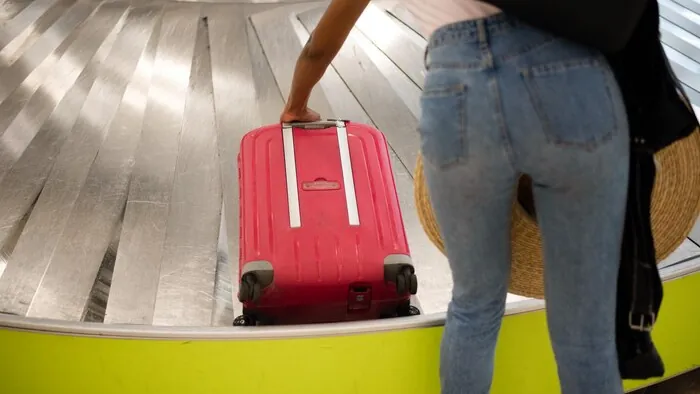
A traveller lifting a red suitcase off an airport baggage carousel
What Must Clients Declare?
The Ministry for Primary Industries (MPI) treats these as risk goods:
Food, including packaged snacks and gifts.
Plant and animal products, such as seeds, honey, meat and dairy.
Used outdoor gear: hiking boots, tents and sports equipment used outdoors.
If a client is unsure, the safe answer is to declare it. Declared items are checked, and many are allowed in.
Why Do Boots Matter for Walking Groups?
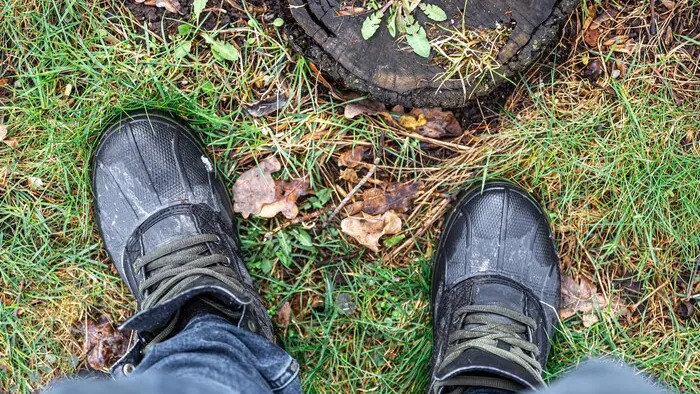
MPI asks that used hiking and sporting footwear, gaiters included, arrive clean and free of soil and seeds. It also advises leaving felt-soled waders at home, because they are likely to be seized at the border. For a walking group, a pre-departure reminder to clean boots at home saves time in the arrivals hall.
Walking shoes on wet grass beside a tree stump
What Are the Fines?
NZ$400 instant fine for failing to declare risk goods, even by mistake. MPI says forgetting or not knowing the rules is not a reason to waive it.
Up to NZ$100,000 and possible imprisonment for deliberate concealment.
Fines are set by the government and can change, so confirm them on the MPI site before each briefing.
Does Farm Contact Change the Plan?
Yes. Travellers declare any contact with livestock. MPI also sets a one-week stand-down after arriving from a country with foot-and-mouth disease (FMD) before going onto a farm or near susceptible animals. If a programme has a farm stay early in the trip, we ask about each client's recent farm contact at booking.
Frequently Asked Questions
Does the New Zealand Traveller Declaration cost anything?
No. The digital declaration is free on the official website or app, and a paper form is available on arrival for travellers who cannot complete it online.
Do children need their own declaration?
Yes. A separate declaration is needed for every passenger, including children and infants.
What happens if a client forgets to declare food?
MPI can issue an instant NZ$400 fine, even when the omission is accidental. Declaring the item, or using the airport biosecurity bins, avoids it.
Can a group visit a farm on its first day?
Not if any traveller arrives from a country with foot-and-mouth disease. MPI sets a one-week stand-down before farm visits for those travellers.
Our New Zealand team adds the biosecurity points to each group's arrival notes and plans the first night near the airport, so a bag inspection does not push the programme. We plan multi-destination programmes across Thailand, Japan, Korea and New Zealand.
Write to b2b@explera.co.nz or message +66 93 656 8090 on WhatsApp. Explera DMC is IATA TIDS-registered (96215733) and an ASTA member (900408341).