Onsen Water Labels: How Agents Choose Baths for Groups
15 October 2026 · Explera DMC · 3 min read
The short answer
Japanese hot springs must post a notice saying whether their water is diluted, heated, recirculated or treated, and a new rating, Yuchelin, now judges onsen on the water alone. Explera DMC's Japan team reads those notices before booking, so agents can match each group to a bath that suits its size and its clients' priorities.
Onsen water labels are about to get more attention from clients. A new rating called Yuchelin judges Japanese hot springs on the water alone, and its first list of top-rated baths is due in late October 2026. Our Japan team explains the labels and the rating in its note on onsen water quality; this page looks at what they mean for an agent choosing hotels and ryokan for a group.
What Is Yuchelin?
Who runs it. Yuchelin is a general incorporated association based in Minato, Tokyo, which calls its scheme Japan's first hot spring rating guide.
What it judges. Five things about the bath water: the character of the spring, its freshness (how it is supplied), its rarity, safety and hygiene management, and its environmental and cultural value. Rooms, food and service are not part of the rating.
When. Its first awards, Yuchelin Award 2026, are set for 26 October 2026 with the support of Japan's Ministry of the Environment, where it plans to name 21 three-star facilities. Two-star and one-star ratings are planned from 2027.
What it means for agents. Expect clients who follow it to ask for a starred bath. The list is short, so treat a starred onsen as a highlight for a small group rather than a base for a large one.
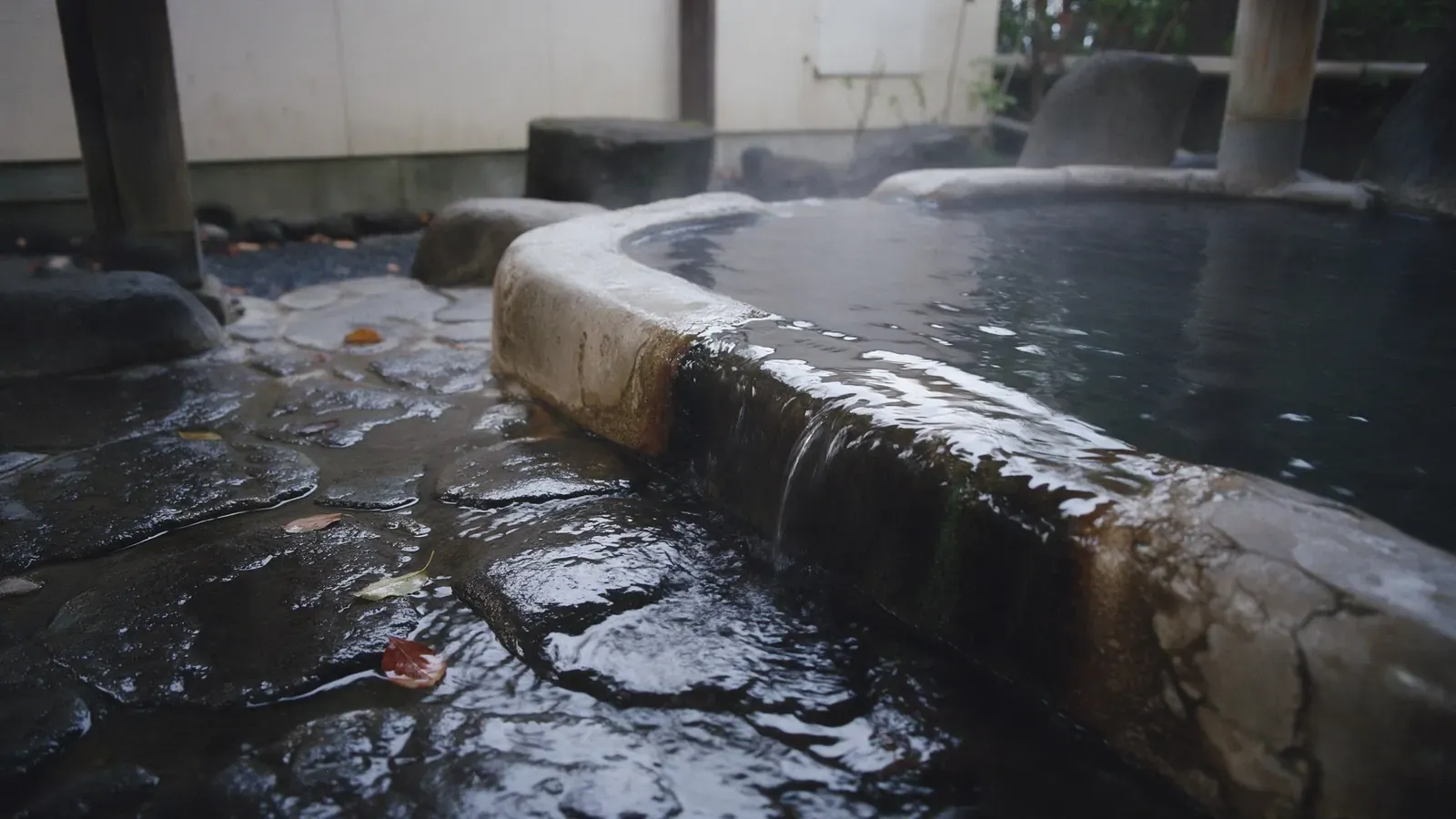
Hot spring water spilling over the stone rim of a small outdoor bath.
What Do the Labels at an Onsen Mean?
Since 24 May 2005, Japan's Ministry of the Environment has required hot spring facilities to post a notice, with the reason, when they add water, heat it, recirculate it, add bath additives or disinfect it. The terms clients will meet:
Gensen kakenagashi. Spring water flows into the bath and out again without being recirculated.
Junkan. The water is filtered and recirculated.
Kasui and kaon. Water has been added, or the water has been heated.
None of these is a fault. A spring that is too hot has to be cooled, and one that is too cold has to be heated.
How Do We Match Onsen to a Group?
Large groups. Big hotels usually recirculate and disinfect, which keeps a busy bath clean. For most groups this is the right choice, and we say so to clients who ask.
Clients who care about the water. Free-flowing baths are usually found at smaller ryokan with fewer rooms. We split a larger group across nearby inns or give it separate bathing times.
Strong springs. Sulphur and acidic water can smell, sting or stain clothing and jewellery. We warn clients in advance and keep a milder bath nearby.
Ask before you promise. A label describes the bath on the day of the notice. We confirm the water and the bath times with each property in Japanese before we put them in a proposal.
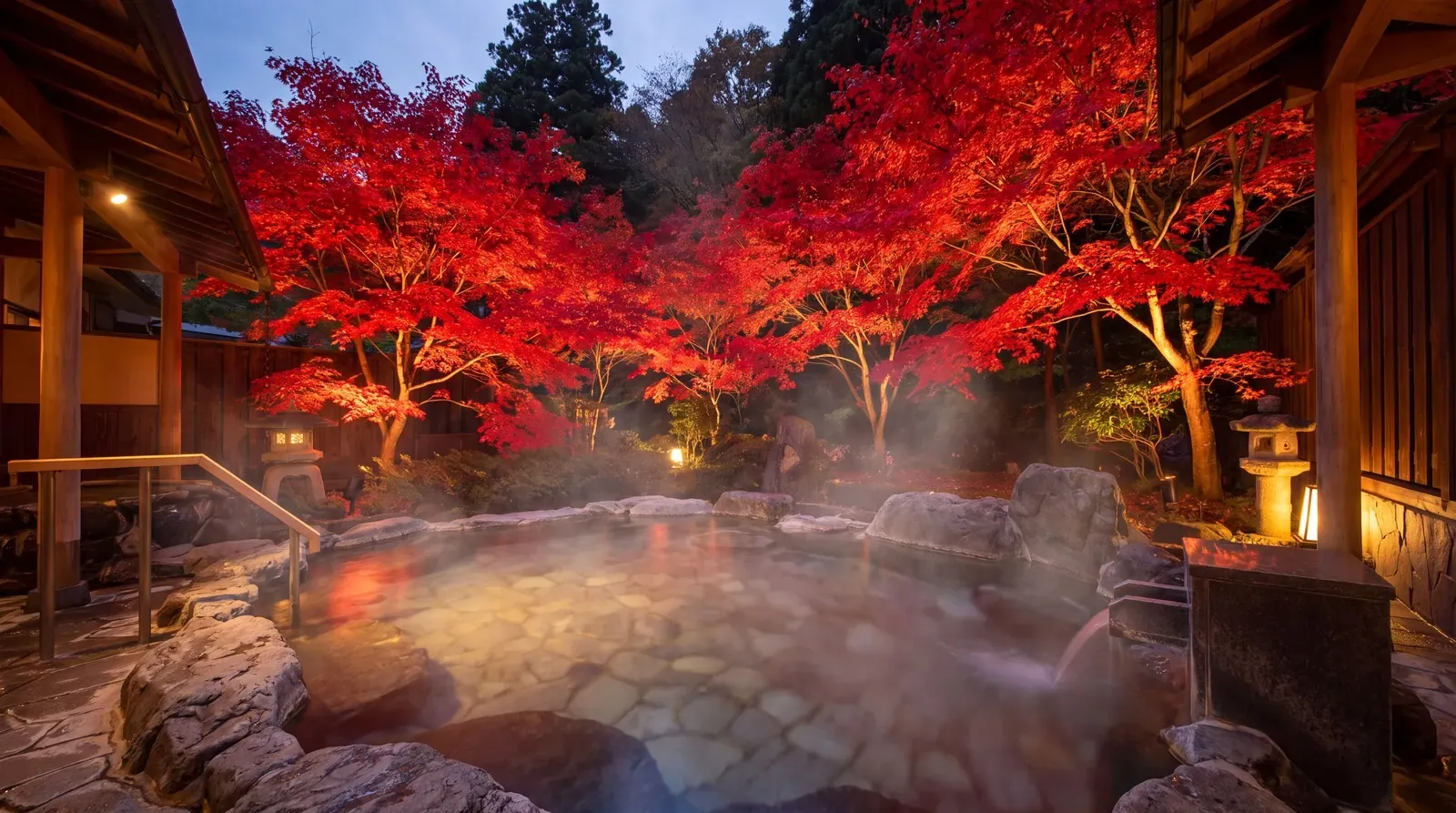
An outdoor bath lit at night under red maple trees, with steam rising off the water.
Frequently Asked Questions
What is Yuchelin?
A hot spring rating from a Tokyo-based association. It judges the bath water itself, such as freshness, rarity and hygiene management, and plans to name its first 21 three-star facilities on 26 October 2026.
What does gensen kakenagashi mean?
Spring water flows into the bath and out again without being filtered and recirculated. Many travellers prefer it, but it is most common at smaller baths.
Is a recirculated onsen a poor choice for a group?
No. Filtering and disinfecting keeps a busy bath clean, which is why large hotels do it. We choose the bath to suit the group's size and the clients' priorities.
Do onsen in Japan have to say how their water is treated?
Yes. Since May 2005, facilities must post a notice, with the reason, if they add water, heat it, recirculate it, add bath additives or disinfect it.
Our Japan team chooses hotels and ryokan for groups, reads each property's bath notice, plans bathing times for larger groups and confirms every arrangement with suppliers in Japanese.
Write to b2b@explera.jp or message +66 93 656 8090 on WhatsApp. Explera DMC is IATA TIDS-registered (96215733) and an ASTA member (900408341).